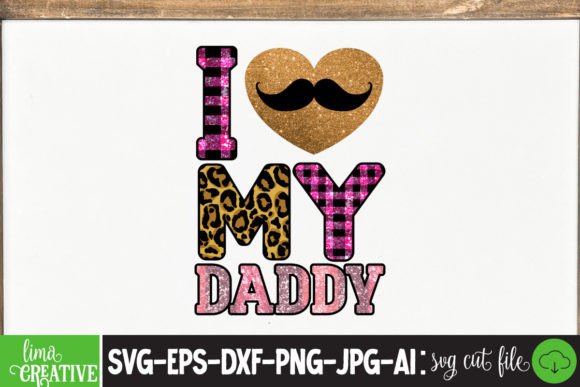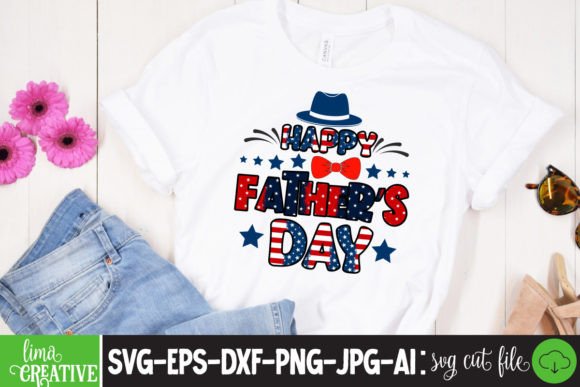
Happy Fathers Day Sublimation PNG
As a designer who spends more time than I care to admit staring at stitch lines and thread tension, I don’t just buy graphics; I evaluate them for viability. When I look at Happy Fathers Day Sublimation PNG, my first instinct isn’t to see a pretty picture—it’s to see a production plan. This is a digital asset that promises high resolution and print-readiness, but the real question for any embroiderer or small business owner is: does it translate well from screen to fabric?
The product description highlights that this is a digital download containing one zip file with flowing files, specifically a 300 DPI PNG and JPG. For those of us in the world of T-Shirt Designs and Graphics, clarity is king. A 300 DPI image is generally sufficient for sublimation printing, but when we are talking about embroidery, the stakes change. We need crisp edges, distinct shapes, and enough negative space to allow the needle to breathe. Let’s break down how this design holds up under the microscope of real-world application.
First Impressions and Visual Personality
From a purely aesthetic standpoint, the mood of Happy Fathers Day Sublimation PNG feels celebratory and approachable. The title suggests a focus on the father figure, which immediately narrows our target audience to gift-givers, family-oriented brands, and seasonal sellers. In the crowded market of holiday embroidery, standing out requires a balance of sentimentality and style.
The layout appears to be designed for versatility. Whether you are creating a custom embroidered patch for a denim jacket or adding a subtle touch to a baby onesie, the visual personality needs to shift without losing its identity. The "flowing files" mentioned in the description hint at a design that might have organic curves rather than rigid geometric blocks. This is crucial because curved designs often require different hoop stabilization techniques than blocky text-based designs. It feels like a design meant to be worn with pride, not just seen as a logo.
Real-World Application: From Screen to Stitch
I recently had a client request a limited run of personalized aprons for a Father’s Day pop-up shop. They wanted something that felt handmade but looked professional enough for boutique branding. This is where evaluating a design like Happy Fathers Day Sublimation PNG becomes practical. If this graphic were converted into a machine embroidery design, how would it behave?
- Custom Apparel: On a sweatshirt or t-shirt, this design could serve as a central chest placement or a back yoke accent. The high resolution ensures that even if the design includes fine details, they should remain legible after digitizing.
- Tote Bag Design: Canvas totes are a staple for craft fair products. A clean, bold design works best here. If the PNG has strong contrast, it will likely translate well to heavy cotton twill, provided the stitch density is adjusted to prevent puckering.
- Baby Embroidery: For personalized gifts like burp cloths or bibs, smaller hoop sizes are common. The reviewer must check if the smallest elements of the design remain distinct when scaled down. Tiny lettering or intricate decorative accents can become muddy stitches if the digitizer doesn’t simplify the path.
- Embroidered Patch: Patches offer a lot of room for detail. If this design is used as an applique design, the base layer provides stability, allowing the top layer (the Happy Fathers Day text or graphic) to sit higher and pop visually. This adds texture and perceived value to the finished product.
For Etsy sellers and creative entrepreneurs, the ability to use this as a digital product preview is also key. High-quality mockups generated from this source can help drive engagement. Buyers want to see what the final product looks like before they commit, especially for commercial embroidery projects where margins matter.
Where Caution Is Required
No design is perfect for every surface. While Happy Fathers Day Sublimation PNG seems robust, there are specific scenarios where an experienced designer would hesitate.
Small Hoop Sizes: If you are working with a 4x4 inch hoop or smaller, you need to ensure the entire composition fits without feeling cramped. Crowded designs lead to thread breaks and needle strikes. Test the bounding box carefully.
Textured and Stretchy Fabrics: Knits, jersey materials, and textured fabrics like fleece or boucle can distort straight lines. If the design relies on precise alignment, it may warp during stitching. Using a proper stabilizer—cut-away for knits, tear-away for wovens—is non-negotiable here.
Dark Fabric and Contrast: The description mentions print-ready files, but embroidery depends entirely on thread colors. A light-colored design on dark fabric requires a dense underlay or a backing layer to prevent show-through. Conversely, dark threads on dark fabric can disappear if the stitch type (like satin stitch vs. fill stitch) doesn’t provide enough light reflection.
Curved Surfaces: Applying this to caps or hats introduces curvature. Flat designs often stretch or distort when pulled over a dome. You may need to adjust the digitization to account for the curve, ensuring the text remains readable and the graphic doesn’t look squashed.
Practical Designer Notes for Implementation
Before you upload this file to your embroidery software or send it to a production partner, follow these steps to protect your reputation and your bottom line.
- Test on Scrap Fabric: Never go straight to the final product. Run the design on the exact fabric you intend to sell. Check for puckering, thread tension issues, and color accuracy.
- Review Stitch Density: High-resolution graphics do not automatically mean optimal stitch density. Too many stitches per square inch can make the fabric stiff and uncomfortable. Look for a balance between coverage and flexibility.
- Check Small Details: Zoom in on the original PNG. Are there thin lines or tiny dots? These are candidates for simplification during the digitizing process. Running stitch is great for outlines, but fill stitch is better for solid areas. Decide which technique serves the design best.
- Black and White Mockup: Convert the design to grayscale to check contrast. If the elements blend together in black and white, they will likely struggle in color too.
- Confirm Licensing: The product states "DIGITAL DOWNLOAD ONLY." This usually implies personal use unless specified otherwise. If you plan to sell finished items made from this design, you must verify if a commercial license is included. Selling unauthorized commercial embroidery can lead to serious legal issues.
Final Verdict on Value and Appeal
Ultimately, Happy Fathers Day Sublimation PNG offers a solid foundation for seasonal merchandise. Its high resolution and clear format make it a reliable asset for designers who need to move quickly during peak holiday seasons. For the hobbyist making a personalized gift, it provides a stress-free starting point. For the small shop product seller, it represents a low-cost entry into the Father’s Day market, provided the digitization is handled with care.
The design’s strength lies in its adaptability. It can anchor a tote bag design, elevate a sweatshirt embroidery project, or add a special touch to a holiday gift. However, the success of the finished product depends entirely on the execution. Thread choice, fabric quality, and stabilizer selection will determine whether the customer sees a cheap knockoff or a premium handmade product.
By treating this graphic not just as an image but as a blueprint for construction, you can leverage its potential effectively. It is a tool for connection—a way to celebrate fathers through the tactile warmth of embroidery. Just remember to respect the limitations of the medium, test thoroughly, and always prioritize the integrity of the stitch. That is how you build trust with your buyers and create designs that last long after the holiday season ends.