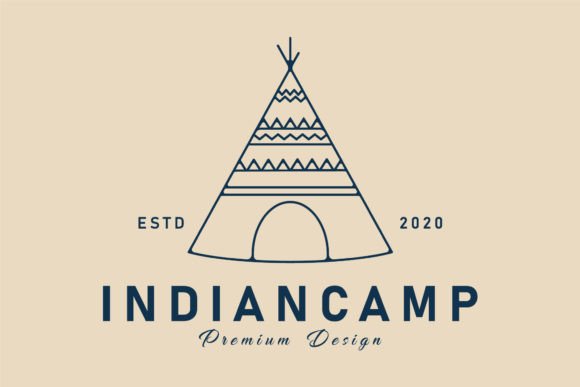
Indian Camp Line Art Logo Native Culture
As a designer who spends more time than I care to admit staring at stitch charts and debating thread colors, I approach every new machine embroidery design with a healthy dose of skepticism. The market is flooded with graphics that look beautiful on screen but fall apart under the needle. Today, I am evaluating the Indian Camp Line Art Logo Native Culture file set to see if it holds up in the real world of production, client work, and small business merchandising.
This isn't just about whether the lines are clean; it is about how the design translates from a vector file into a tactile, stitched reality. Whether you are an Etsy seller, a boutique owner, or a crafter looking for that perfect centerpiece for a custom gift, understanding the practical limitations and strengths of a design like this is crucial. Here is my honest breakdown of how this embroidery project performs when moved from the digital asset library to the hoop.
First Impressions: Mood and Visual Personality
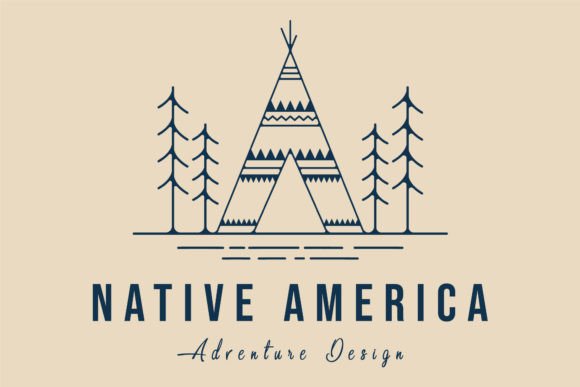
The moment you open the files—specifically the EPS 10 vector provided—the first thing that strikes me is the clarity of the line art. In the realm of Logos and Graphics intended for stitching, simplicity is often the hardest trait to master. This design leans heavily into minimalism, which is a double-edged sword. On one hand, it screams professionalism and modern branding. On the other, it demands precision.
The visual personality of the Indian Camp Line Art Logo Native Culture is grounded and respectful. It does not rely on cluttered details or excessive shading to make its point. Instead, it uses negative space and confident strokes. When I imagine this on a product, it feels right at home on rustic linen aprons, heavyweight canvas tote bags, or even soft cotton baby onesies. It carries a sense of heritage without being overly ornate, making it versatile for various niches, from outdoor lifestyle brands to cultural appreciation gifts.
However, as a reviewer, I must note that "line art" can sometimes be misleading. Without fill stitches, there is no texture to catch the light. This means the success of this embroidery file rests entirely on the quality of the thread and the contrast between the thread and the fabric. If you choose a low-contrast color combination, the design will disappear. If you choose high contrast, it pops with striking clarity.
Real-World Application: Where Does This Fit?
Let’s talk about actual use cases. I recently had a client request a personalized gift set for a couple who loved camping and indigenous art. They wanted something subtle but meaningful. I immediately thought of the Indian Camp Line Art Logo Native Culture. Here is how I would deploy it across different product categories:
- Custom Apparel and Sweatshirts: Placed over the heart or centered on the chest of a crewneck sweatshirt, this design works beautifully. The clean lines complement the heavy fabric weight. It looks like a premium brand logo rather than a generic clip-art transfer. For sweatshirt embroidery, I recommend using a slightly thicker polyester thread to give the lines a bit of dimension.
- Tote Bags and Canvas Goods: This is perhaps the strongest use case. A sturdy canvas tote bag provides the perfect stable surface for line art. The design fits naturally on the side panel or center front. It elevates a simple bag into a handmade product with intention. For an Etsy seller, this is a high-value item because it feels curated and thoughtful.
- Baby Embroidery and Nursery Decor: There is a gentle quality to this design that translates well to softer items. Imagine this stitched in cream or light grey thread on a white muslin blanket or a burp cloth. It adds a touch of warmth and storytelling to baby embroidery projects. However, ensure the scale is large enough so the lines do not become too fragile for frequent washing.
- Embroidered Patches: Because the design is self-contained, it makes for an excellent embroidered patch. You could add a simple satin stitch border around the perimeter to stabilize the edges. These patches are highly popular for backpacks, denim jackets, and beanies, offering a great way to monetize this design asset.
Technical Considerations and Potential Pitfalls
No design is flawless, and knowing where to exercise caution is what separates a pro from a novice. While the Indian Camp Line Art Logo Native Culture is clean, it has specific areas where attention to detail is required.
First, consider the stitch density. Since this is primarily line art, it likely relies on running stitches or narrow satin stitches. If you attempt to digitize or resize this incorrectly, thin lines can break or pucker. Always test the design on scrap fabric before committing to your final product. Pay close attention to corners and sharp angles; these are common failure points in line-based designs where the needle might skip or the thread tension might loosen.
Fabric choice is equally critical. Avoid using this design on highly textured fabrics like chunky knits or bouclé, as the needle may struggle to follow the precise lines, resulting in a muddy appearance. Similarly, stretchy fabrics require a strong stabilizer to prevent distortion. If you are working with dark fabric, ensure your thread color provides enough contrast. Light threads on dark backgrounds can look faint unless you use a high-quality, opaque polyester thread.
Another factor to watch is the hoop size. If the design is scaled down too small, fine details may merge together. Conversely, scaling it up too large on a limited machine area might cause alignment issues. Check the recommended hoop size in the documentation. If it is not explicitly stated, perform a test run in your smallest and largest available hoops to determine the optimal scale for your machine.
Stabilizer and Thread Strategy
To achieve the best result, proper stabilization is non-negotiable. For woven fabrics like cotton or linen, a cut-away stabilizer is ideal for durability, especially for items like custom apparel that will be washed repeatedly. For knit fabrics, a tear-away or wash-away stabilizer might be preferred depending on the garment's structure.
When selecting thread colors, think about the mood. Earth tones like olive green, rust orange, or deep brown can enhance the natural, camp-themed aesthetic. Alternatively, monochromatic schemes (e.g., black thread on black fabric) create a sophisticated, tonal look. Just remember that tonal designs require perfect tension and high-quality thread to avoid visible imperfections.
Commercial Viability and Brand Consistency
For those of you selling finished goods, the Indian Camp Line Art Logo Native Culture offers strong commercial potential. It is recognizable, culturally resonant, and aesthetically pleasing. It helps build brand consistency if you are creating a cohesive line of products. Customers trust handmade items that show attention to detail, and a cleanly stitched line art design conveys that care.
However, always verify the licensing terms. Even though the description mentions editable vectors, you must confirm whether you have the rights to sell physical products made with this design. Some licenses restrict commercial use or require attribution. As a responsible creator, protecting your reputation means respecting intellectual property rights.
Final Verdict
The Indian Camp Line Art Logo Native Culture is a solid, versatile addition to any designer’s toolkit. It excels in clarity and mood, making it suitable for a wide range of applications from personal gifts to professional merchandise. Its strength lies in its simplicity, but that same simplicity demands respect for technique, fabric choice, and thread selection.
If you are willing to put in the prep work—testing on scraps, choosing the right stabilizer, and planning your color palette—this design will reward you with a polished, professional-looking finished product. It is not a "set it and forget it" file; it is a design asset that requires thoughtful execution. But for those who value craftsmanship and aesthetic integrity, it is absolutely worth the effort.
Before you start your next craft business rush, take the time to explore the SVG and PDF files included. Experiment with different thread types and fabric combinations. You might find that this understated line art becomes the signature element of your most beloved creations.